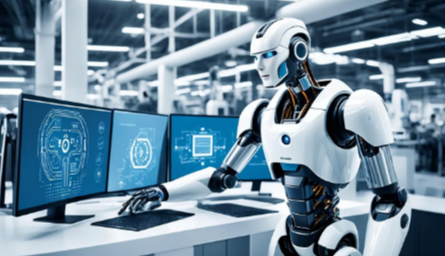
Artificial Intelligence is reshaping the technological landscape in profound ways. Its applications span various sectors, driving efficiency and enhancing decision-making processes. In healthcare, AI contributes to improved diagnostics, while in finance, it strengthens fraud detection. This evolution extends to transportation and user experience as well. The implications of AI’s integration into these fields raise critical questions about future innovations and ethical considerations. What challenges and opportunities lie ahead in this rapidly changing environment?
The Role of AI in Healthcare Innovations
As the healthcare sector continues to evolve, the integration of artificial intelligence (AI) emerges as a transformative force, fundamentally reshaping how medical professionals deliver care.
Through predictive analytics, AI enhances diagnostic accuracy and treatment outcomes, facilitating personalized medicine tailored to individual patient needs.
This evolution not only optimizes resource allocation but also empowers patients, fostering a more engaged and informed healthcare experience.
AI’s Impact on Financial Services
While the financial services industry has long relied on data analytics to inform decision-making, the advent of artificial intelligence (AI) is revolutionizing this landscape by introducing advanced algorithms that enhance efficiency and accuracy.
AI significantly improves fraud detection and risk assessment, enabling institutions to identify anomalies and potential threats swiftly. This transformation fosters greater security and trust, empowering financial entities and their clients alike.
Transforming Transportation Through AI
How has artificial intelligence reshaped the transportation industry?
AI has catalyzed the rise of self-driving vehicles, promising to revolutionize mobility by reducing accidents and enhancing accessibility.
Additionally, traffic optimization algorithms analyze real-time data to alleviate congestion, enabling smoother travel experiences.
As these technologies evolve, they offer unprecedented freedom in transportation, allowing individuals to navigate urban landscapes more efficiently and safely.
Enhancing User Experience With AI Technologies
Artificial intelligence has significantly transformed user experience across various domains, ensuring that interactions are not only more intuitive but also personalized.
By leveraging predictive analytics, organizations can anticipate user needs, tailoring content and services accordingly.
This shift towards personalized interactions enhances engagement, fosters loyalty, and ultimately empowers users, allowing them to navigate digital landscapes with greater ease and satisfaction, reflecting their unique preferences and desires.
Read Also: How AI Works in Simple Terms
Conclusion
In conclusion, the transformative power of artificial intelligence is akin to a master conductor guiding a symphony of technological innovation across various sectors. From revolutionizing healthcare and finance to reshaping transportation and user experiences, AI is not merely an enhancement but a catalyst for a new era of efficiency and engagement. As industries continue to embrace this technological wave, the promise of AI shines brightly, heralding a future where human potential is amplified by intelligent systems.