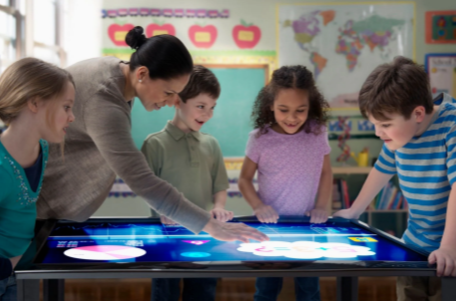
AI integration in education is reshaping traditional paradigms. It facilitates personalized learning experiences, allowing students to progress at their own pace. Administrative efficiency sees improvement as AI automates scheduling and resource management. Intelligent tutoring systems offer tailored support, addressing individual learning needs. Data-driven decision-making further enhances instructional strategies. Yet, the implications of these advancements raise critical questions about equity and access in educational environments. The exploration of these dynamics is essential for future development.
Personalized Learning Experiences
Personalized learning experiences have emerged as a transformative approach in education, leveraging the capabilities of artificial intelligence to tailor instruction to individual student needs.
By utilizing adaptive assessments, educators can identify specific learning gaps, enhancing student engagement and motivation.
This innovative methodology not only fosters autonomy in learners but also cultivates a dynamic learning environment, promoting freedom and self-directed exploration in education.
Enhanced Administrative Efficiency
Administrative processes within educational institutions often present significant challenges that can impede overall efficiency.
By implementing AI technologies, schools can achieve automated scheduling and optimize resource allocation. These innovations streamline operations, reduce manual workload, and enhance decision-making.
Consequently, educators can focus more on teaching, fostering an environment that prioritizes student learning while ensuring administrative tasks are managed with precision and agility.
Intelligent Tutoring Systems
Intelligent Tutoring Systems (ITS) represent a transformative approach to individualized learning in educational environments.
By leveraging adaptive learning techniques, ITS can tailor educational experiences to meet each student’s unique needs.
Furthermore, the integration of learning analytics allows for real-time assessment of student progress, enabling targeted interventions.
This innovative framework empowers learners, fostering autonomy and enhancing overall educational outcomes in diverse settings.
Read Also: How AI Is Transforming Businesses
Data-Driven Decision Making
As educational institutions increasingly adopt technology, the emphasis on data-driven decision making becomes vital for enhancing student outcomes.
Through data analysis and predictive analytics, educators can identify trends, personalize learning experiences, and allocate resources effectively.
This approach empowers institutions to make informed choices, fostering an environment that promotes academic freedom and innovation while addressing individual student needs and improving overall educational quality.
Conclusion
In conclusion, AI is transforming education by personalizing learning experiences, optimizing administrative efficiency, and providing intelligent tutoring systems. It empowers educators to make data-driven decisions while fostering an environment of continuous improvement. As AI evolves, it not only enhances student engagement and autonomy but also streamlines the educational landscape. Embracing this technological revolution signals a commitment to innovation, ensuring that educational institutions are equipped to meet the diverse needs of learners in an ever-changing world.
